
What is the difference between GET and POST methods?
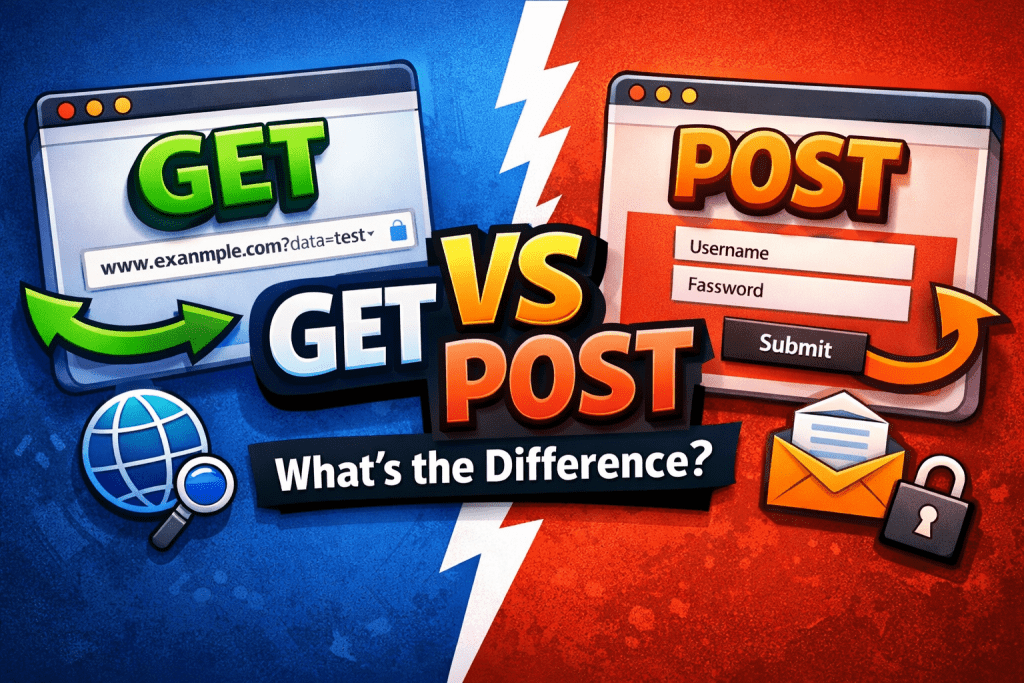
Here’s a clear and detailed explanation of the difference between GET and POST methods in HTTP:
| Feature | GET | POST |
|---|---|---|
| Purpose | Used to retrieve data from the server. | Used to send data to the server (e.g., submitting a form). |
| Data Visibility | Appended to the URL as query string, so visible in URL. | Sent in the request body, not visible in URL. |
| Data Length | Limited (depends on browser & server, usually around 2000 characters). | No practical limit (depends on server configuration). |
| Caching | Can be cached by browsers and stored in history. | Usually not cached. |
| Bookmarking | Can be bookmarked because data is in URL. | Cannot be bookmarked directly. |
| Security | Less secure because data is visible in URL. | More secure for sensitive data (still needs HTTPS for real security). |
| Idempotent | Yes – multiple identical requests have same effect. | Not necessarily – sending multiple requests may create multiple records. |
| Use Case | Searching, filtering, retrieving resources. | Submitting forms, uploading files, sending sensitive data. |
Example:
GET Request:
GET /search?query=php HTTP/1.1
Host: example.com
POST Request:
POST /submit-form HTTP/1.1
Host: example.com
Content-Type: application/x-www-form-urlencoded

name=Himanshu&email=himanshu@example.com
✅ Key takeaway:
- GET is for fetching/displaying data.
- POST is for sending/modifying data.
No comments yet! You be the first to comment.